
CRM Lead Management
After Seequent’s merger with Bentley Systems, the business was preparing to sunset Microsoft Dynamics in favour of Salesforce Lightning. On paper, this looked like a technology transition: move teams onto a new CRM, simplify the stack, and standardise sales operations.
In practice, it exposed something much larger.
The migration surfaced deep inconsistencies in how leads were defined, captured, qualified, nurtured, and measured across regions. Different markets were following different rules. Teams had built local workarounds. Handoffs between marketing, sales, and customer success were uneven. Reporting was noisy. And many of the metrics in circulation were telling the business very little about whether lead activity was actually contributing to revenue.
This project became an opportunity to do more than improve CRM usability. It became a chance to redesign lead management as a customer experience and business workflow problem.
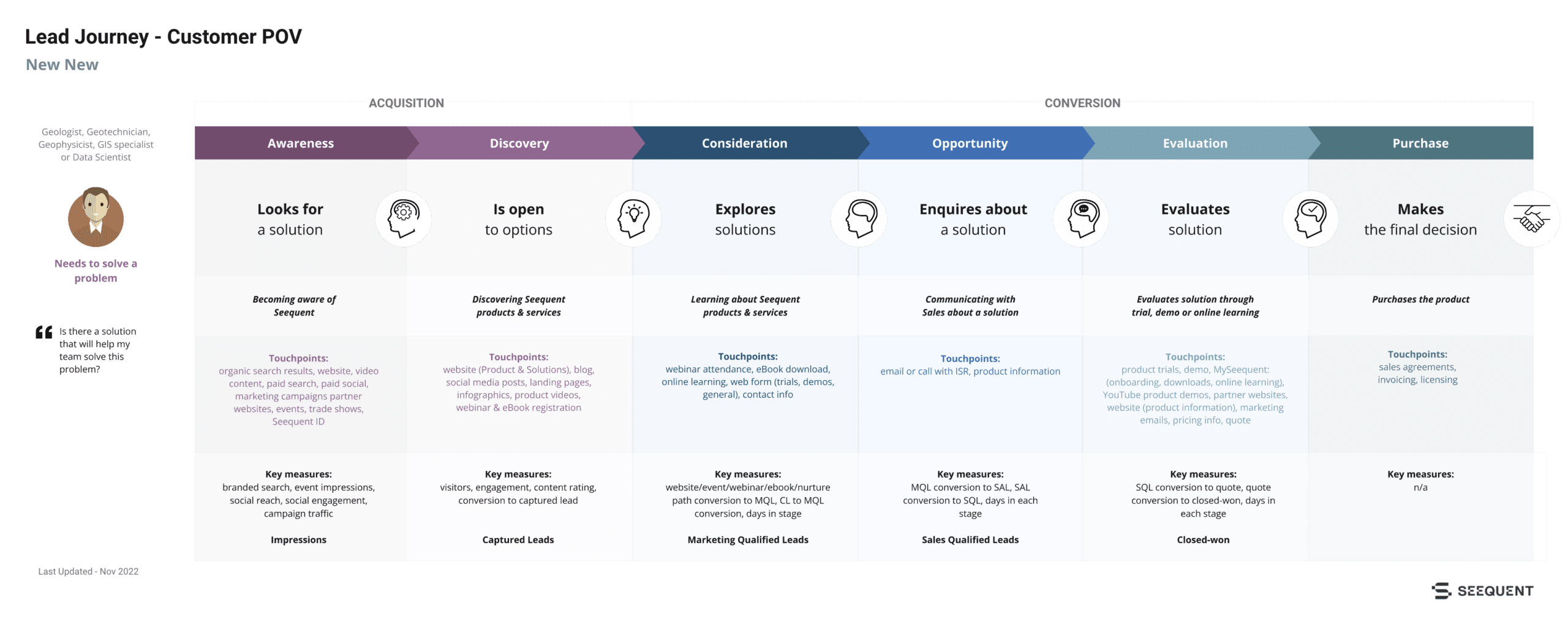
This work sat at the intersection of CRM migration, customer acquisition, and operational design.
The business was already looking closely at lead success through the earlier Bow Tie Funnel and North Star Metrics work. That programme had revealed an important gap: Seequent lacked a cohesive way to understand whether upstream lead activity was creating meaningful downstream value. There were metrics, but they were inconsistent. There were workflows, but they were fragmented. There were global teams, but they were not operating from a shared model of lead quality or funnel progression.
The CRM migration brought those issues into sharper focus.
Rather than treating Salesforce Lightning as a simple replacement for Microsoft Dynamics, this project reframed the transition as a chance to redesign:
-
how leads entered the system
-
how they were qualified
-
how ownership and handoffs worked
-
how the business measured success
-
how sales teams across regions could work from a more coherent process
The Real Problem
Section titled “The Real Problem”The first thing this project clarified was that the company did not simply have a CRM usability issue.
It had a workflow coherence issue.
Different sales teams across EMEA, NAM, LAM, and APAC were defining and handling leads differently. Some followed structured qualification processes. Others relied on local norms, intuition, or manual intervention. Marketing and sales were not always aligned on what counted as a meaningful lead. Customer success was not consistently visible in the broader journey. And the reporting layer often prioritised volume and activity over signal and actual contribution to revenue.
In other words, the system was producing numbers without producing enough confidence.
Tooling was only part of the problem
Section titled “Tooling was only part of the problem”Microsoft Dynamics was certainly contributing to the friction. Users described cumbersome workflows, poor fit with their day-to-day needs, and common reliance on workarounds outside the system. Manual data entry and duplicate handling were recurring frustrations. Important handoff points were poorly defined or poorly supported.
But replacing the tool would not fix the problem on its own.
If the underlying process remained fragmented, Salesforce would simply become a cleaner-looking place to recreate the same confusion.
That is why the work needed to begin with the broader workflow, not the interface alone.
The North Star work had already exposed the measurement gap
Section titled “The North Star work had already exposed the measurement gap”This project did not begin in isolation. Earlier Bow Tie Funnel and North Star work had already shown that the business lacked a cohesive framework for understanding lead success. KPIs were inconsistent across regions, which made it difficult to see which activities were genuinely driving engagement, qualification, and conversion.
That meant the CRM transition became an ideal moment to connect operational redesign with a more meaningful measurement model.
The question was no longer just: How do we make Salesforce usable?
It became: How do we make lead management globally coherent, easier to work with, and better aligned to how the business actually wants to grow?
Research Across Regions
Section titled “Research Across Regions”Because the problem was global, the research had to be global too.
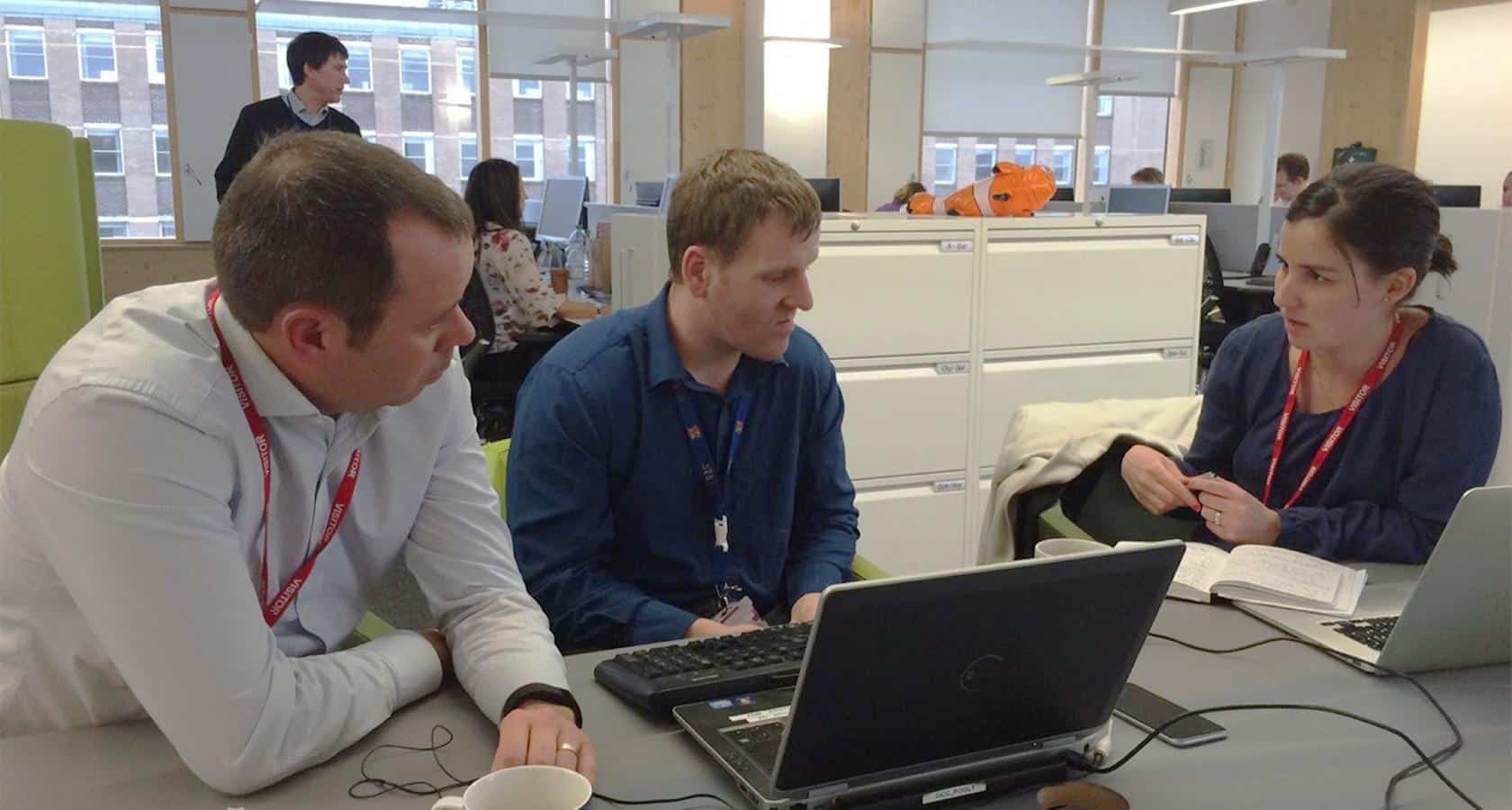
We planned and ran research with sales teams and adjacent stakeholders across EMEA, NAM, LAM, and APAC. The goal was not simply to collect complaints about the old CRM. It was to understand how lead management actually worked in context: what teams were doing, where it broke down, how local practices differed, and what users needed from a better process.
Methods
Section titled “Methods”The research combined several methods:
-
semi-structured interviews with sales and customer success teams across regions
-
contextual inquiry and observation of day-to-day CRM usage
-
heuristic evaluation of the existing Dynamics workflows
-
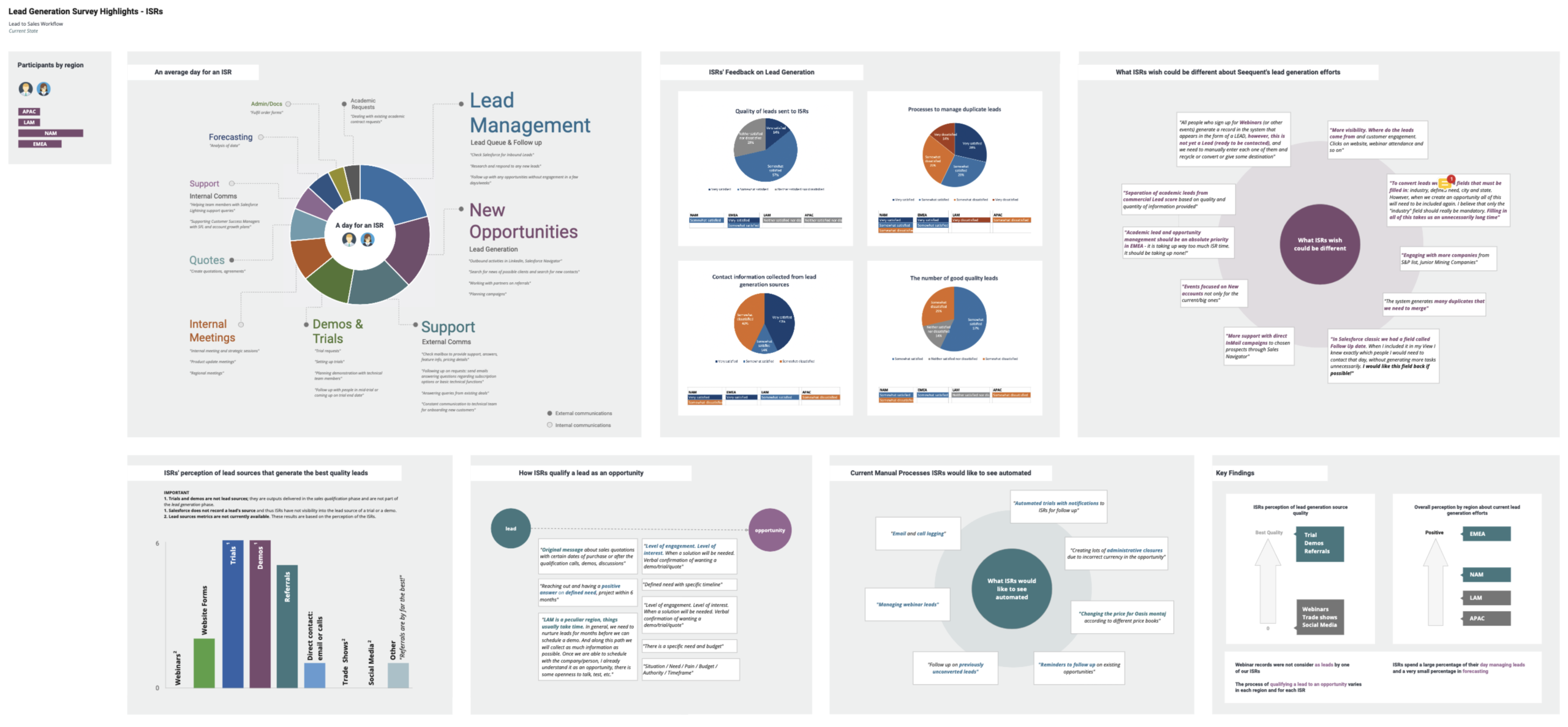
surveys to capture broader patterns in pain points and preferences
-
analysis of CRM usage and funnel behaviour to identify leakage and inconsistency
This gave us both narrative depth and broader pattern recognition.
What we found
Section titled “What we found”A few themes came through very clearly.
First, regional variation was real. Some teams followed more rigid qualification processes, while others relied on looser, more intuition-driven judgement. That meant the business did not really have one lead-management model. It had several.
Second, manual workarounds were common. Users were stepping outside the CRM because the workflows did not support the way they actually worked. That is always a warning sign. When people create shadow processes, the organisation loses visibility and consistency at exactly the points it most needs them.
Third, handoffs lacked clarity. Marketing, sales, and customer success did not have a consistently legible flow of ownership, accountability, or stage definition. This meant leads could stall, duplicate, or move forward without enough shared understanding of status or value.
And finally, users overwhelmingly wanted simplicity. Not less rigour, but less drag. They wanted clearer workflows, fewer redundant actions, and more support from the system itself.
Reframing The Workflow
Section titled “Reframing The Workflow”Once the research had exposed the problem properly, the next step was not to jump straight into fields and forms. It was to redesign the underlying lead-management model.
That meant stepping back and asking:
-
what should the ideal lead journey look like?
-
where should qualification happen?
-
how should ownership shift across teams?
-
what should be standardised globally and what should remain locally adaptable?
-
what metrics should the business care about at each stage?
This was where the work moved from research into co-design and service redesign.
Co-designing with the business
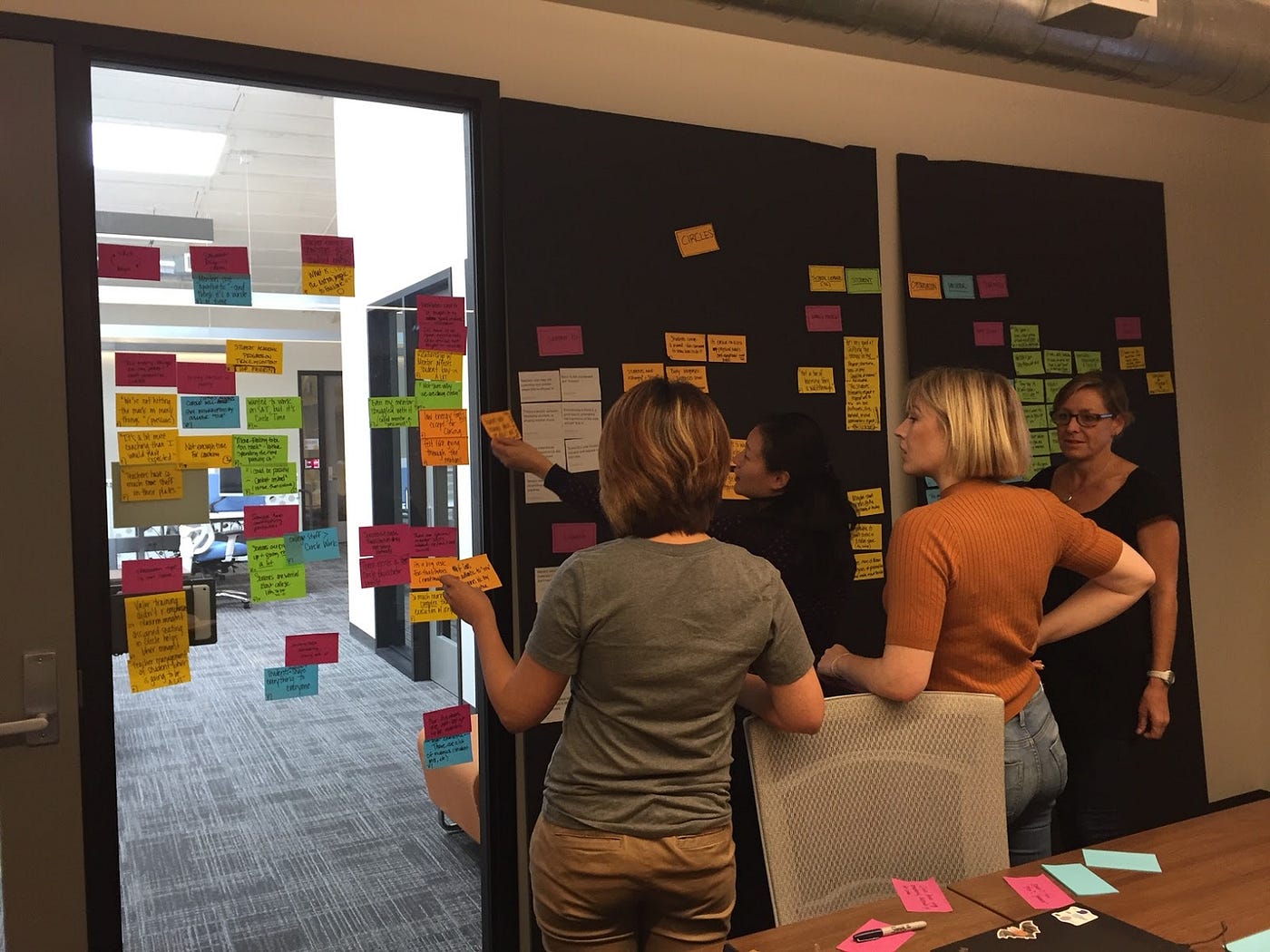
Section titled “Co-designing with the business”We ran workshops with stakeholders across sales, marketing, and customer success to map the ideal lead flow and test new ways of structuring the process. The goal was not only to improve usability. It was to create a model that teams could actually align around.
This included:
-
cross-functional workshops
-
user journey mapping
-
collaborative workflow redesign
-
prioritisation of improvements based on impact and effort
-
prototype exploration of improved Salesforce structures
The workshops were important because they created shared ownership of the future process rather than positioning it as a UX recommendation handed down to operational teams.
From fragmented local logic to a clearer global model
Section titled “From fragmented local logic to a clearer global model”One of the most valuable outcomes of the workshops was a stronger shared structure for lead handling.
This included:
-
a more unified lead scoring and qualification model
-
clearer stage definitions
-
better visibility of ownership and status
-
more deliberate handoffs between teams
-
simpler, more supportable workflows for sales users
-
better alignment between workflow stages and business metrics
That did not mean eliminating all regional nuance. It meant reducing unnecessary inconsistency so the organisation could finally compare like with like.
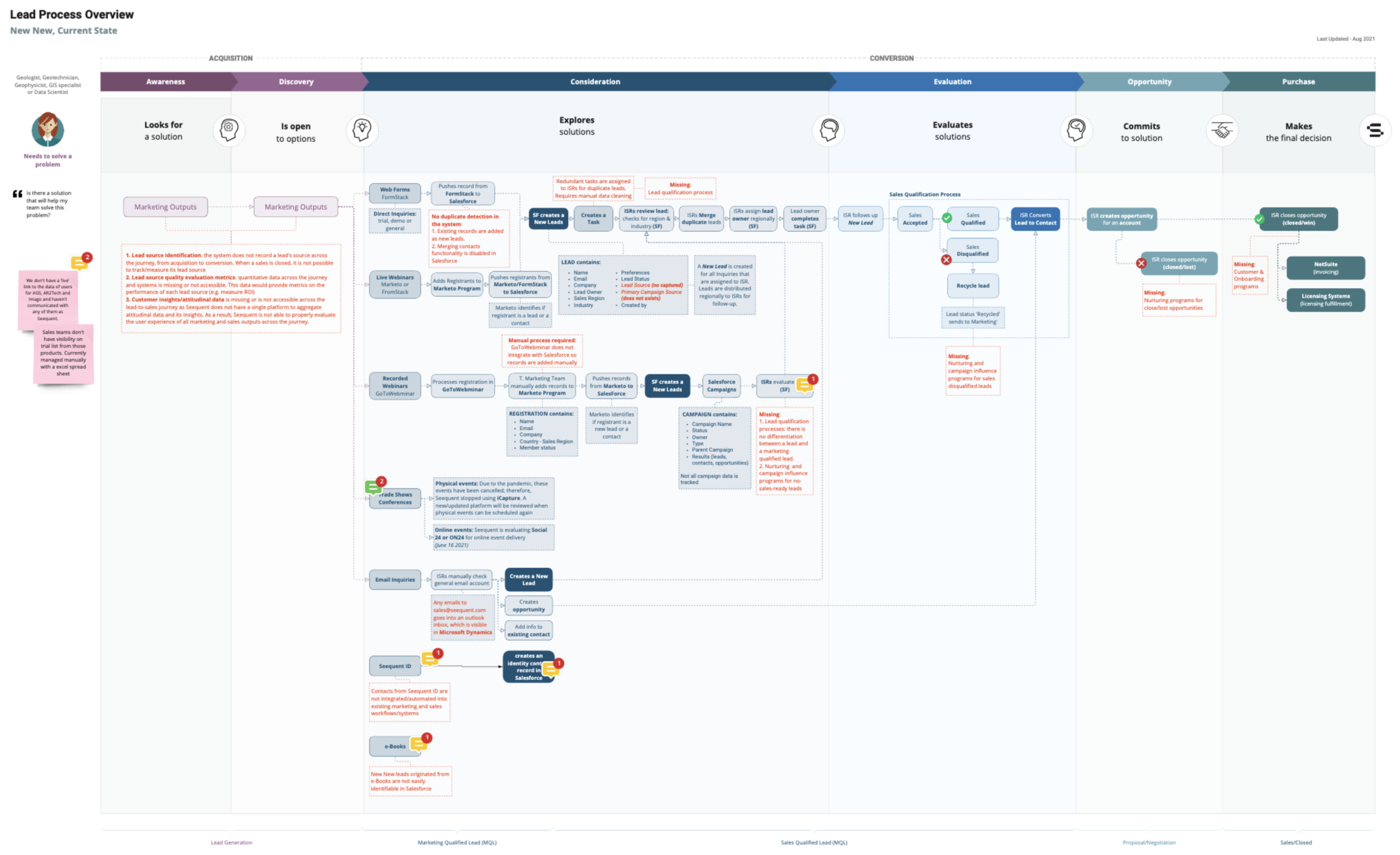
Making the process visible
Section titled “Making the process visible”The redesigned lead process also made the customer acquisition journey much easier to reason about. By mapping the existing process and comparing it to the proposed future state, the team could see where records were duplicated, where enrichment was manual, where decisions lacked support, and where lifecycle stages needed cleaner structure.
That visibility was critical. A lot of internal workflow pain persists because no one can see the whole system clearly enough to challenge it.
Outcomes & Reflection
Section titled “Outcomes & Reflection”The most important outcome of this project was not simply a smoother Salesforce rollout.
It was a clearer, more coherent model of lead management across the business.
By the end of the work, the team had stronger alignment around:
-
what a lead was
-
how it should move through the funnel
-
where qualification occurred
-
how ownership transferred across teams
-
what metrics mattered at each stage
-
how the CRM should support, rather than obstruct, that process
What this enabled
Section titled “What this enabled”-
a more globally consistent approach to lead qualification
-
clearer visibility into lead journey, ownership, and handoffs
-
reduced dependence on manual workarounds
-
a stronger connection between operational CRM behaviour and strategic measurement
-
better foundations for evaluating lead activity as a leading indicator of revenue rather than a noisy retrospective metric
Why this mattered
Section titled “Why this mattered”This was a strong example of UX research functioning as business design.
The project started as a technology migration. It became a way to challenge how the business understood customer acquisition, pipeline quality, and cross-team workflow. It showed that internal tools are never just internal. When they shape how leads are captured, nurtured, and evaluated, they are directly shaping customer experience and business performance.
That is why the work mattered. It improved usability, yes, but it also improved clarity, accountability, and strategic alignment.
Reflection
Section titled “Reflection”What I like about this project is that it shows a version of design that sits beyond screens.
The most useful contribution here was not a prettier CRM. It was helping the organisation see that the migration was an opportunity to fix deeper structural issues: fragmented qualification logic, poor handoffs, weak metrics, and workflows that had drifted too far from how teams actually worked.
That is the kind of work I find especially valuable.
When research helps a business stop treating symptoms as the problem, better design decisions follow naturally.
And in this case, the CRM transition became exactly that kind of moment.