
StyleIQ — Building a grounded AI stylist for real retail inventory
Online fashion does not suffer from a lack of choice. It suffers from a lack of confidence.
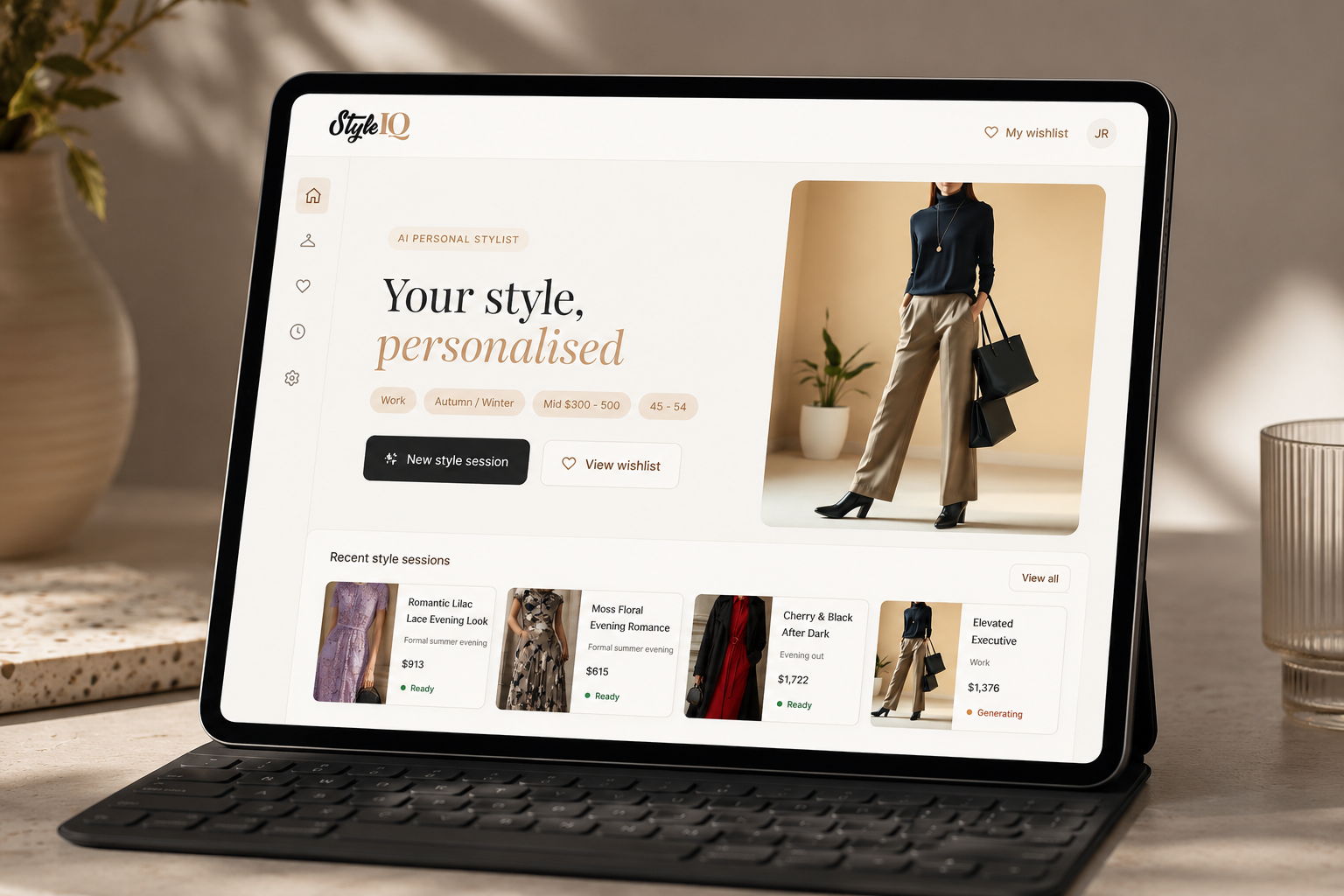
I conceived, designed and built StyleIQ: an AI-native personal styling product that turns a real department-store catalogue into coherent, shoppable outfit recommendations.
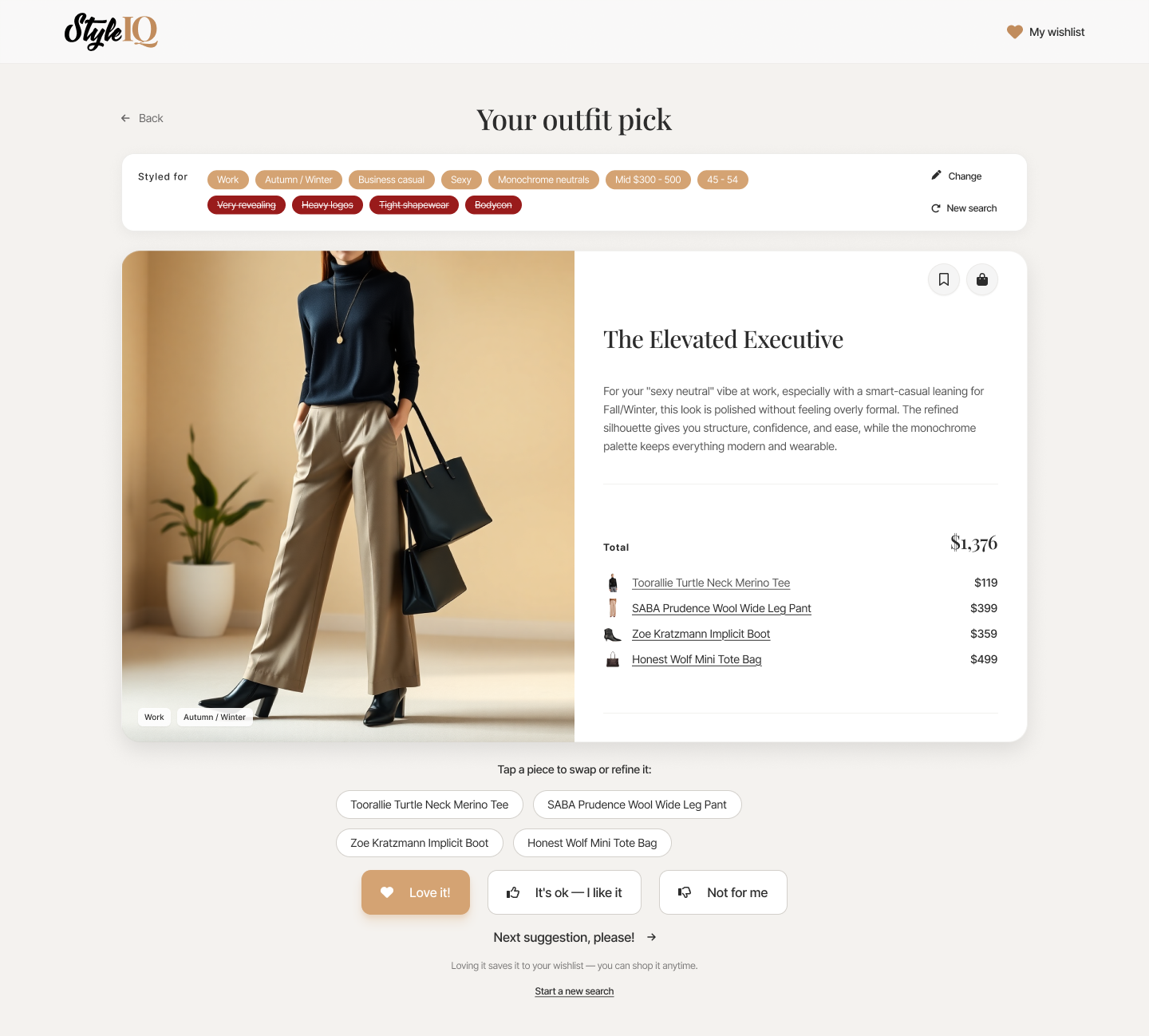
Rather than treating AI as a conversational search layer, I designed StyleIQ as a grounded product system. The stylist works from eligible catalogue products, selects complete outfits in a structured format, explains its decisions, generates editorial imagery only after the look is defined, and links customers directly to the items they can buy.
The product system
Section titled “The product system”- Customer brief Occasion, style, budget, season, constraints
- Agent tools & catalogue Search, inspect and compose from eligible products
- Deterministic validation Completeness, availability, product truth and Remix rules
- Recommendation Selected products, price and stylist rationale
- Editorial image Visualises the approved look — never selects it
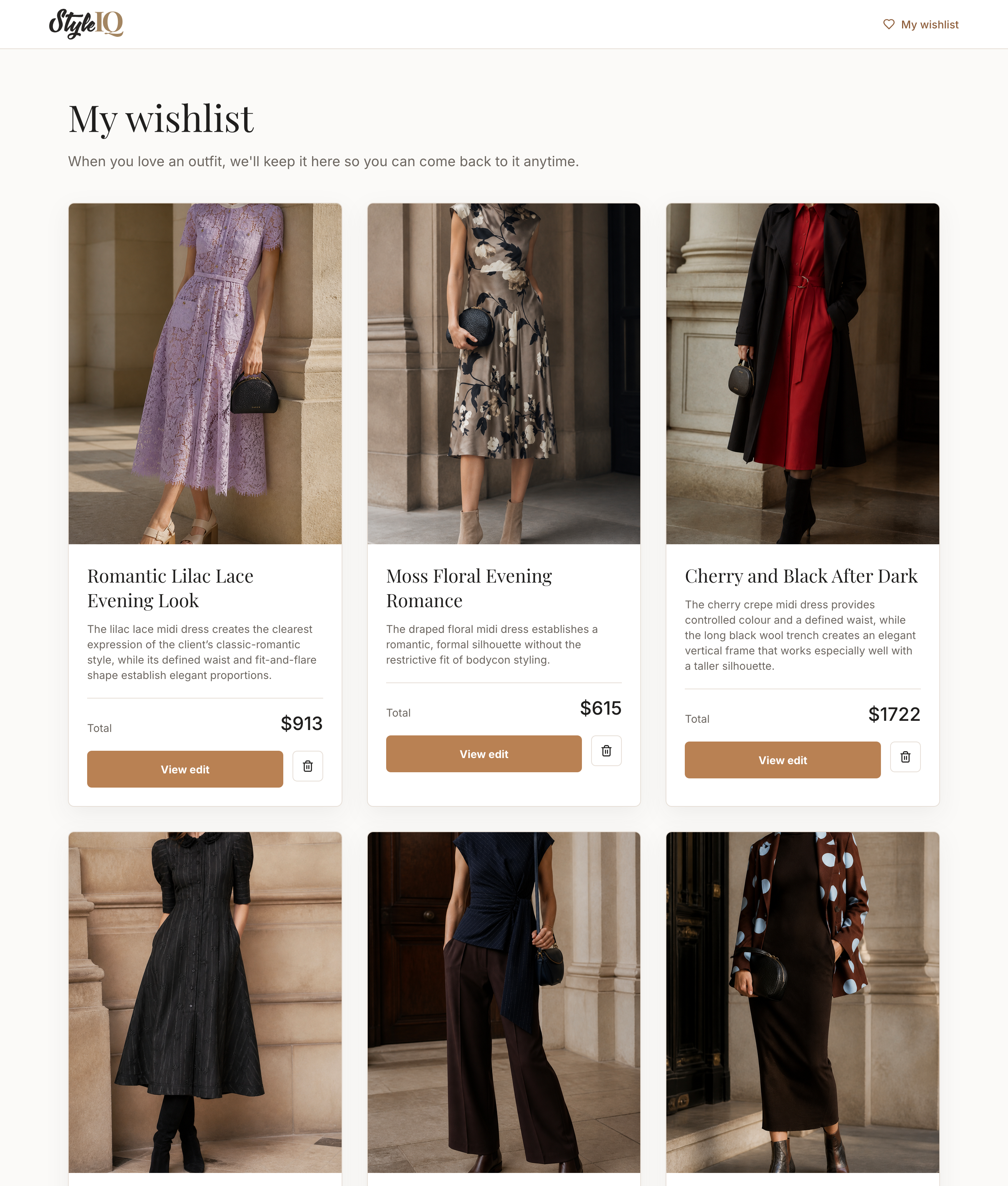
- Wishlist Save looks and visit the real product links
The customer journey is deliberately simple. The system underneath is not: it makes product truth, styling judgement, and visual aspiration distinct responsibilities with distinct safeguards.
Agentic engineering: creativity with product truth
Section titled “Agentic engineering: creativity with product truth”The most challenging design problem was enabling creative styling without allowing the system to invent products, substitute garments, or return visually convincing but commercially invalid looks.
I designed the stylist as a constrained-but-creative agent. It can choose catalogue searches, inspect the products it considers, develop distinct styling directions, and decide what leads the silhouette. The system then enforces the few constraints that protect customer trust:
- Only real, eligible, surfaced store products can be selected.
- Every recommendation must be a physically coherent, complete outfit.
- Structured selected products and stylist rationale must agree.
- In Remix, the customer’s uploaded garment is included exactly once in every look.
- Editorial imagery visualises an already selected outfit; it does not choose or replace products.
Agent tools in action
Section titled “Agent tools in action”Rather than asking a single model to guess an answer, the stylist works through a traceable sequence: it reads a catalogue summary, runs selective searches, inspects candidate products, develops styling directions, receives a creative-director review, validates the draft, and returns the final look.
The review step can repair an invalid draft before it is shown to the customer. That preserves stylist freedom while making recommendations auditable and reliable.
Grounding and trust
Section titled “Grounding and trust”How I prevented AI hallucinations
Section titled “How I prevented AI hallucinations”Trust was designed into the system boundary, not added as a disclaimer after the fact. The stylist can only select surfaced products; it returns structured output; deterministic checks validate the selection; customers receive real product links and prices; and immutable catalogue releases make each recommendation traceable to a known product set. URL auditing and safe availability handling prevent stale or unsafe paths from quietly undermining the experience.
Product systems, not just prompts
Section titled “Product systems, not just prompts”StyleIQ separates three different AI responsibilities:
- Editorial product intelligence — structured editorial cards help the system understand how products can function in a wardrobe.
- Agentic stylist reasoning — a tool-using stylist explores the eligible catalogue and composes complete looks for a customer brief.
- Editorial image generation — a separate multimodal system visualises the chosen outfit using product and owned-garment references.
This architecture matters because product truth, stylist judgement, and visual aspiration require different safeguards.
The Remix challenge
Section titled “The Remix challenge”Remix styles around a customer’s own garment. That required a stronger rule than “include the uploaded item if possible”: the garment must be preserved exactly once in every complete look and every alternative.
I designed fixed placement into the outfit contract, handled uploads privately through Supabase with server-side image retrieval, and kept image generation grounded in both the selected catalogue products and the customer’s garment reference. The result is not a generic look inspired by an upload; it is a shoppable outfit genuinely styled around it.
A real product failure and fix
Section titled “A real product failure and fix”Testing surfaced a failure that mattered to the customer experience: a saved alternative could miss editorial-image generation when a rate limit was reached. The recommendation still existed, but the incomplete visual state made the saved look feel broken.
I added a retry control, explicit loading and error states, and automated checks around the flow. It is a small example of the difference between a convincing demo and a product that can recover gracefully when a dependent service fails.
Operational product design
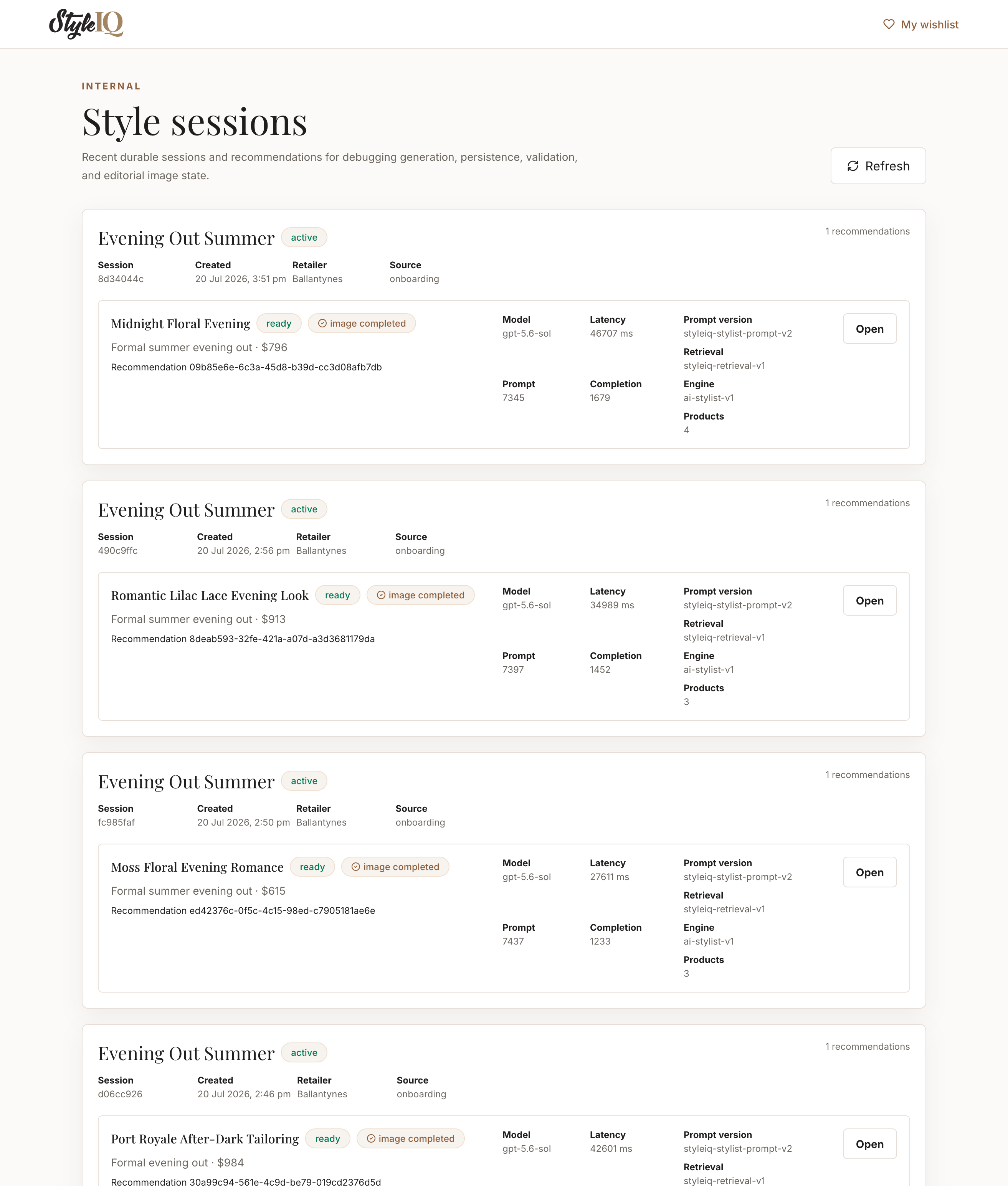
Section titled “Operational product design”I treated recommendation quality as a systems problem, not a prompt-writing exercise. The product includes deterministic product validation, URL auditing, catalogue release management, availability exclusions, private image handling, structured traces, model/version metadata, automated backend and frontend tests, visual regression checks, and deployment verification.
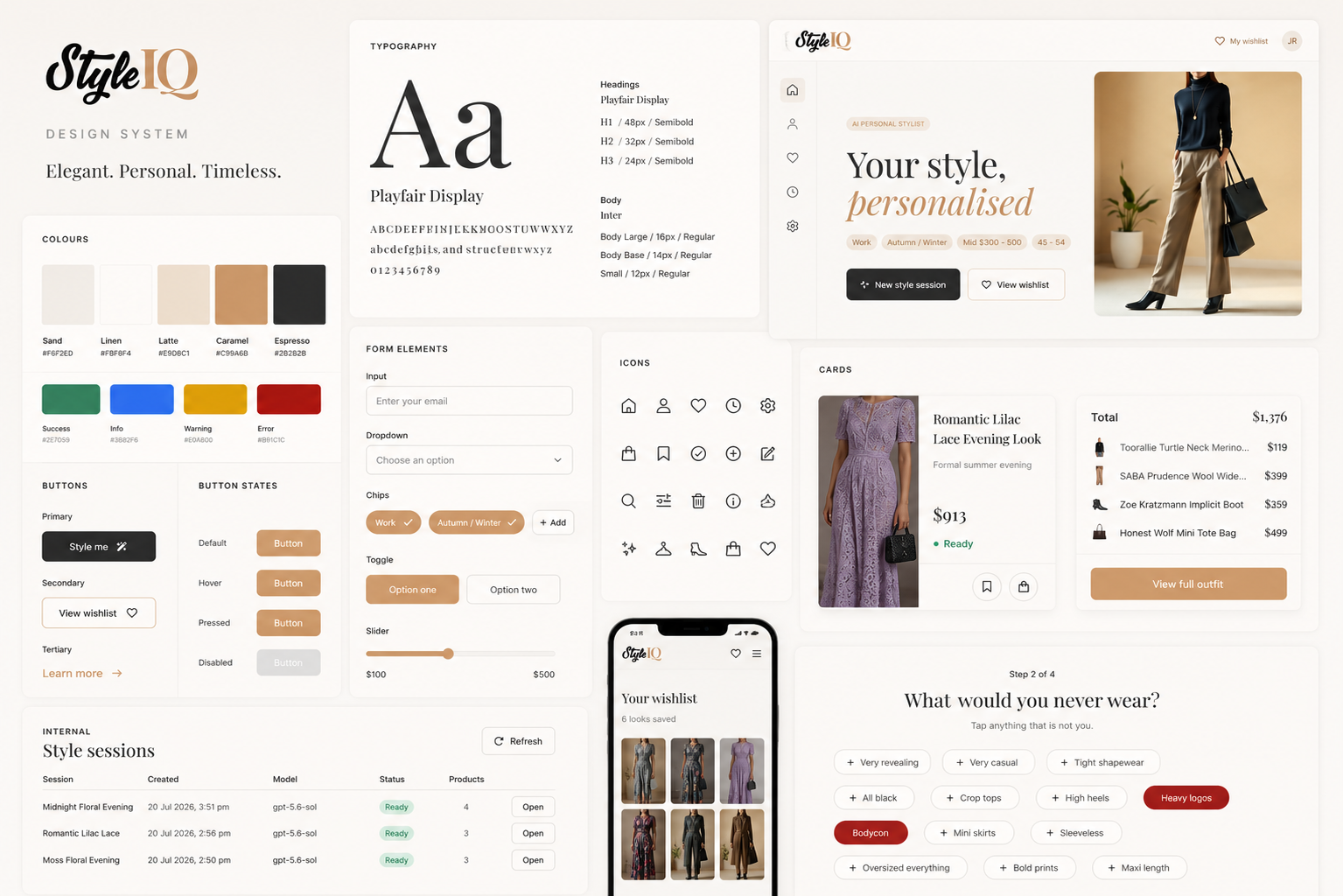
The internal dashboard makes this operational reality visible: each recommendation can be traced through its model, prompt, retrieval and catalogue versions, selected product set, token usage, latency, and image-generation state.
Evidence from the prototype system
Section titled “Evidence from the prototype system”These are prototype-system measures, not commercial outcomes:
- 3,476 catalogue products ingested
- 2,855 editorial cards created for product intelligence
- 648 catalogue-coverage scenarios checked
- 139 backend tests supporting the product system
A designed product, built end-to-end
Section titled “A designed product, built end-to-end”I built a polished React and TypeScript customer experience for onboarding, recommendations, Remix, wishlists, product lists, responsive layouts, and internal operations. A reusable design system covers typography, colour, spacing, components, interaction states, loading, errors, and accessible icon controls.
The backend is Python and FastAPI, using structured product, outfit, recommendation, persistence, and validation contracts. Catalogue releases are versioned and immutable, with checksums, provenance, coverage validation, rollback support, and safe availability handling.
What I would do next
Section titled “What I would do next”The next stage would focus on learning and production readiness: SKU-specific negative feedback, scheduled catalogue maintenance, systematic agent quality and cost evaluation, and production monitoring.
Outcome
Section titled “Outcome”StyleIQ is a working AI retail prototype that demonstrates how product design, front-end engineering, data pipelines, agentic systems, and operational rigour can combine into an experience customers can trust.